


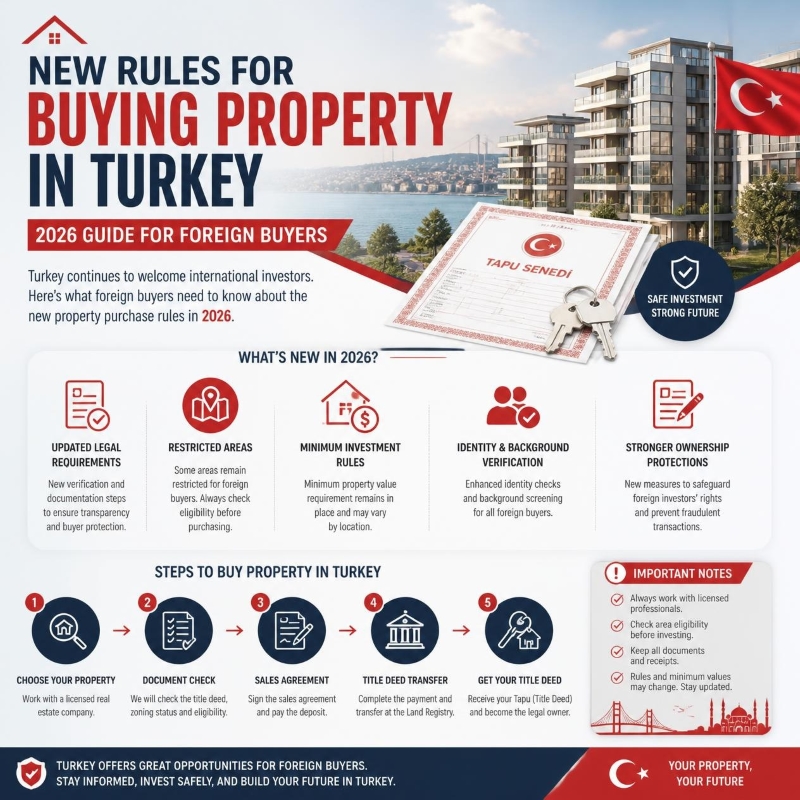
What Are the New Rules for Buying Property in Turkey? 2026 Guide for Foreign Buyers
Turkey continues to attract thousands of international property investors every year thanks to its affordable real estate prices, strategic location, and strong rental market. However, understanding what are the new rules for buying property in Turkey is essential before making an investment.
In recent years, the Turkish government has introduced several legal and financial regulations affecting foreign buyers. These updates are designed to improve transparency, strengthen security, and regulate residence permit and citizenship applications.
Whether you’re purchasing a holiday apartment in Antalya, a luxury villa in Bodrum, or an investment property in Istanbul, this guide explains everything you need to know.
Can Foreigners Still Buy Property in Turkey?
Yes. Foreign nationals from most countries can legally purchase residential and commercial property in Turkey.
However, ownership is subject to certain legal restrictions, including:
- The property cannot be located within military or security zones.
- Foreign individuals may purchase up to 30 hectares of land nationwide.
- Foreign ownership in a district cannot exceed legal limits established by Turkish authorities.
- Some nationalities may face additional restrictions depending on international agreements.
Fortunately, these rules rarely affect buyers purchasing apartments, villas, or standard residential properties.
What Are the New Rules?
Several important regulations now affect foreign investors.
1. Property Valuation Report Is Required
One of the biggest changes is the mandatory real estate valuation report.
The report must be prepared by a licensed valuation company and reflects the property’s official market value.
This regulation helps:
- Prevent price manipulation
- Protect foreign buyers
- Improve transparency
- Ensure fair taxation
For citizenship applications, authorities rely on this valuation rather than the advertised sales price.
2. Property Payments Must Go Through Turkish Banks
Foreign buyers must transfer purchase funds through the Turkish banking system.
Cash transactions are no longer accepted for official property transfers involving foreign purchasers.
Buyers must obtain a Foreign Exchange Purchase Certificate proving foreign currency has been converted into Turkish Lira before the title deed transfer.
This regulation increases financial transparency and helps prevent fraud.
3. Residence Permit Rules Have Changed
Buying property does not automatically grant residency.
Recent regulations introduced stricter requirements.
Property owners applying for a short-term residence permit generally need property meeting the applicable minimum valuation threshold under current immigration rules, and eligibility also depends on the property’s location and other legal conditions. Some districts remain restricted for new residence permit registrations due to population-density policies.
Always verify current immigration requirements before purchasing if residency is one of your goals.
4. Citizenship by Investment Rules Remain Strict
Turkey’s Citizenship by Investment Program remains one of the world’s most popular investment migration programs.
To qualify through real estate, investors generally must:
- Purchase eligible property worth at least USD 400,000
- Keep ownership for at least three years
- Complete payment through official banking channels
- Register the required restriction on the title deed
Meeting the investment threshold does not guarantee approval; applicants must also satisfy legal and due-diligence requirements.
5. Additional Verification During Title Deed Transfer
The Turkish Land Registry now performs more detailed verification before issuing title deeds.
Officials may verify:
- Identity documents
- Payment records
- Property valuation
- Tax compliance
- Legal ownership history
These additional checks reduce fraudulent transactions and protect buyers.
Property Purchase Process in Turkey
Buying property in Turkey is relatively straightforward when working with experienced professionals.
The process usually follows these steps:
- Choose a suitable property.
- Hire an independent lawyer (recommended).
- Obtain a Turkish tax number.
- Open a Turkish bank account if required.
- Arrange the official valuation report.
- Transfer funds through the banking system.
- Sign the purchase agreement.
- Complete title deed (Tapu) transfer.
- Register utilities.
Many transactions can be completed within one to three weeks if documentation is complete.
Documents Required
Foreign buyers generally need:
- Valid passport
- Turkish tax identification number
- Passport translation (when required)
- Biometric photographs
- Property valuation report
- Currency exchange certificate
- Bank transfer documentation
- Mandatory earthquake insurance (DASK)
Additional documents may be required depending on the buyer’s nationality or investment purpose.
Turkish Property Taxes and Costs to Consider
Besides the purchase price, buyers should budget for:
- Title deed transfer tax
- Appraisal fees
- Notary expenses (if applicable)
- Legal fees
- Translation fees
- Property insurance
- Annual property tax
Understanding these costs helps avoid unexpected expenses after purchase.
Common Mistakes Foreign Buyers Should Avoid
Many first-time investors make avoidable mistakes.
The most common include:
- Purchasing without legal due diligence
- Ignoring zoning restrictions
- Relying solely on verbal promises
- Not checking title deed records
- Underestimating taxes and fees
- Buying solely for residency expectations
Working with licensed professionals significantly reduces these risks.
Is Buying Property in Turkey Still Worth It?
Despite tighter regulations, Turkey remains one of the most attractive real estate markets for international investors.
Key advantages include:
- Competitive property prices
- High rental demand
- Growing tourism
- Modern infrastructure
- Strong lifestyle appeal
- Potential citizenship opportunities
- Relatively simple purchasing process
The new regulations primarily improve buyer protection rather than discourage investment.
Frequently Asked Questions
Can foreigners still buy property in Turkey?
Yes. Most foreign nationals can legally purchase residential and commercial real estate, subject to location and legal restrictions.
Is a residence permit guaranteed after buying property?
No. Purchasing property does not automatically grant a residence permit. Eligibility depends on current immigration rules and the property’s characteristics.
What is the minimum investment for Turkish citizenship?
The real estate investment threshold is generally USD 400,000, together with other legal requirements, including holding the property for at least three years.
Can I buy property without visiting Turkey?
Yes. Many purchases can be completed through a notarized power of attorney granted to a legal representative.
Are bank transfers mandatory?
Yes. Foreign buyers must complete payment through the Turkish banking system and comply with foreign currency exchange documentation requirements.
Final Thoughts
Understanding what are the new rules for buying property in Turkey is essential before investing. While recent regulations have introduced stricter financial documentation, valuation requirements, and residency conditions, they also provide greater transparency and stronger legal protection for buyers.
If you conduct proper due diligence, work with qualified legal and real estate professionals, and follow the official purchasing process, Turkey remains an attractive destination for both lifestyle buyers and long-term investors.
